
- Keep down-payment and closing money separate from long-horizon market risk when the purchase is near.
- Budget for ownership costs beyond the mortgage payment.
- Reassess emergency reserves after the purchase; the house can create new repair and insurance risks.
- Update the investment plan if housing debt materially changes risk capacity.
Mortgage rates, taxes, insurance, lending standards, local costs, and deductions change by time and jurisdiction.
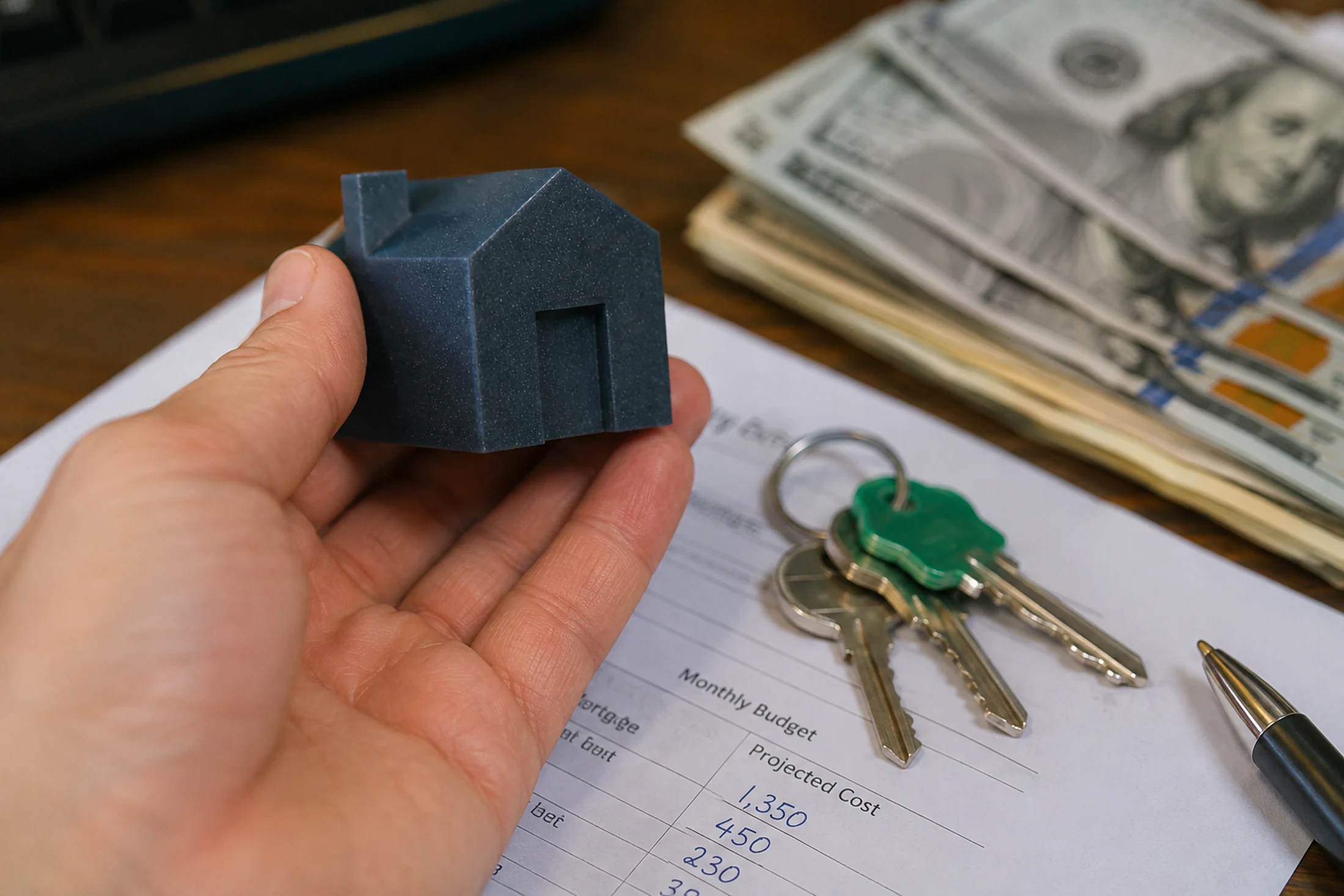
Protect the transaction before optimizing the portfolio
Down payment, closing costs, moving costs, immediate repairs.
Debt service, taxes, insurance, fees, maintenance, utilities.
Rebuild emergency liquidity after closing.
Reassess contributions and risk capacity after the balance-sheet change.
Match the asset to the purchase timeline
Money required soon for a known purchase has a different job from money invested for retirement decades away. The closer and less flexible the purchase date, the less room there may be for market loss.
Review the household risk map after closing
Debt, insurance, concentrated exposure to one property and local economy, and repair obligations can change how much volatility the remaining financial portfolio should carry.
Home-buying mistakes that expose near-term cash to market risk
Using nearly all available cash for the down payment and closing while leaving too little for repairs, moving, emergencies, or income disruption.
Comparing homes only by purchase price or mortgage payment instead of taxes, insurance, maintenance, fees, utilities, and transaction costs.
Selling long-term investments for a near-term purchase without considering timing, taxes, market risk, and whether the down-payment money should already have been in lower-volatility assets.
Separate the home purchase into four cash buckets
A down payment is not the full cash requirement. The transaction can also require closing costs, moving or immediate repair money, and a reserve that still exists after closing. Keeping those buckets separate prevents a long-horizon investment account from becoming the default source for every last-minute cost.
| Bucket | Purpose | Investment question |
|---|---|---|
| Down payment | Cash committed to the purchase price | How certain is the purchase date, and can this money tolerate a market decline before closing? |
| Closing costs | Lender, settlement, title, prepaid, tax, insurance, and other transaction costs as applicable | Has the estimate been updated from actual loan and closing disclosures? |
| Move / initial work | Moving, basic furnishings, essential repairs or safety work | Which items are mandatory now versus optional later? |
| Post-close reserve | Income disruption, home repairs, deductibles, and ordinary emergencies | What liquid buffer remains the day after closing? |
For a hypothetical $400,000 purchase with a 10% down payment, the down payment alone is $40,000. If an illustrative closing-cost estimate were 3%, that would add $12,000 before moving costs, repairs, or a post-close reserve. Actual closing costs vary and are separate from the down payment. The guide is not to use 3% as a universal estimate; it is to model the transaction as several cash demands rather than one number.
Rebuild the household balance sheet after closing
Home ownership changes more than housing expense. It can change emergency-reserve needs, insurance, debt capacity, tax items, geographic concentration, and the amount available for retirement or other investing goals. Re-run the household plan using the actual mortgage payment, taxes, insurance, maintenance assumptions, and remaining liquid assets after the transaction closes.
Do not let the down payment consume the entire liquidity plan
The purchase price is only one part of the decision. A useful home-buying plan separates the down payment from closing costs, moving and initial repair costs, and the cash reserve that should still exist after closing.
Illustrative $400,000 purchase
| Cash need | Illustrative amount | Planning question |
|---|---|---|
| 10% down payment | $40,000 | How does a different down payment change the loan, insurance, and monthly payment? |
| Rough closing-cost planning range | $8,000 to $20,000 | Actual lender, title, tax, insurance, and location-specific costs must be taken from the Loan Estimate and Closing Disclosure. |
| Moving and initial work | Household-specific | What must be paid before the first normal month in the home? |
| Post-closing reserve | Household-specific | What cash remains for an income interruption or urgent repair? |
The goal is not to maximize the down payment in isolation. It is to reach closing with enough liquidity to complete the transaction and still operate the household afterward.
Compare the monthly ownership system, not just principal and interest
Build a monthly view that includes principal and interest, property taxes, homeowners insurance, any mortgage insurance, association dues when applicable, utilities, maintenance, and the amount the investor wants to keep contributing to other long-term goals.
Compare the mortgage as a financing package, not just an interest rate
The note rate is the rate used to calculate loan interest. APR is a broader borrowing-cost measure that incorporates the interest rate and certain loan charges, so it can help compare loans with similar features. Neither number replaces the cash-flow test: a loan with lower upfront cost may carry a higher rate, while paying points can increase cash needed at closing in exchange for a lower rate.
Compare offers using the same loan type, term, rate structure, down payment, and timing assumptions. Separate lender-controlled charges from taxes, insurance, prepaid items, and other costs.
Reconcile the final loan terms, projected payment, cash to close, and closing-cost details with the plan before funds are sent.
If taxes or insurance are collected through escrow, include those amounts when judging the monthly housing burden rather than looking only at principal and interest.
Know whether the rate is fixed or adjustable, when an adjustable rate can reset, and whether the household could carry the payment after an unfavorable reset.
Keep inspection, immediate repairs, moving costs, insurance deductibles, property taxes, association charges where applicable, and a post-closing emergency reserve outside the headline mortgage payment. Housing affordability is a balance-sheet and cash-flow decision, not a lender-approval number.
Before the down payment leaves the account
Separate the down payment, closing costs, moving and first-year work, emergency reserves, and other near-term needs. Only then decide which remaining assets still have a long enough horizon for market risk.
Why should down-payment and closing money usually be separated from long-term portfolio risk?
Because money needed on a known near-term date cannot rely on a market recovery schedule. The home purchase requires liquidity for the down payment, closing costs, repairs, reserves, and early ownership expenses.
Does buying a home automatically mean the investment portfolio should become more conservative?
Not automatically. First measure the new mortgage, reserves, income stability, insurance, concentration in housing, and remaining time horizons. Those facts determine whether risk capacity actually changed.