
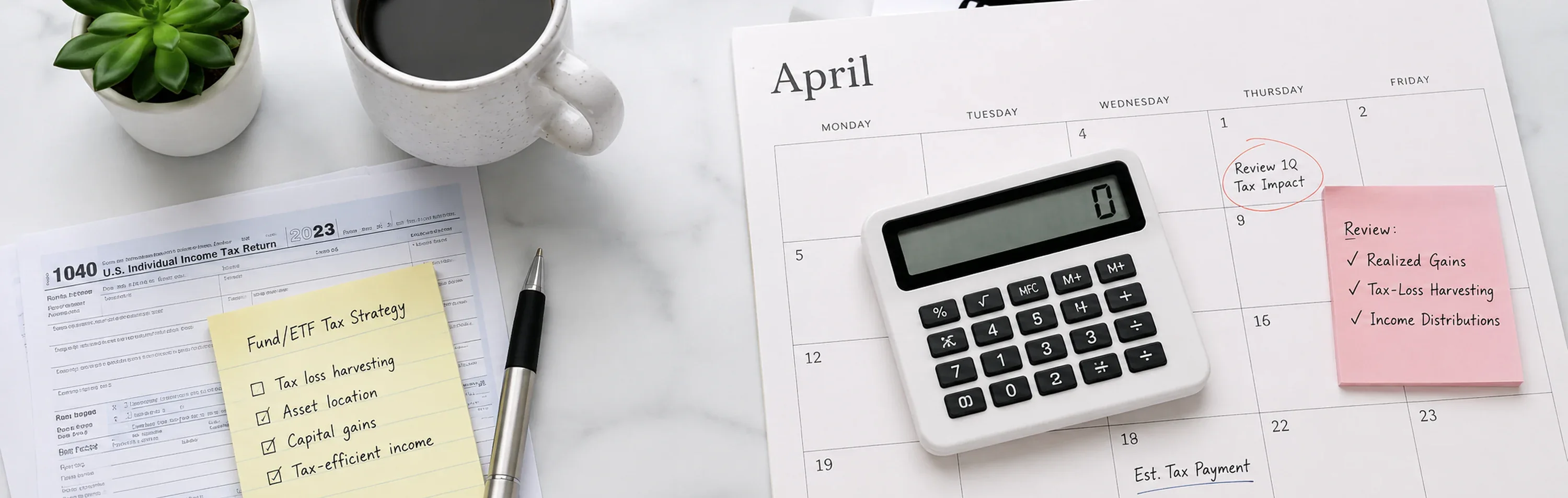
- Fund investors can have tax consequences from distributions and from selling their own shares.
- A distribution can create a tax record even when the cash is automatically reinvested.
- Tax-lot and cost-basis records matter when shares are sold.
- Account type, jurisdiction, holding details, and current tax law can materially change the result.
Map the event before thinking about the tax result
Income or capital-gain distributions may be reported to shareholders.
Reinvested cash can create new tax lots even though no cash leaves the account.
Selling shares can create a gain or loss based on proceeds and basis.
Taxable and tax-advantaged accounts can have different current consequences.
Distinguish activity inside the fund from the investor-level trade
A fund can realize gains and make distributions even if the investor did not sell the investor's fund shares. Separately, an investor-level sale can create another gain or loss record.
Keep tax lots visible
When buying repeatedly, each purchase can create a lot with its own acquisition date and basis. Keep the broker’s basis data and confirmations rather than reconstructing the history later.
Use tax awareness as one input, not the only objective
Tax efficiency matters, but it should not override diversification, liquidity, risk capacity, fees, or account restrictions. Make the investment decision first within the full plan.
Tax-awareness mistakes that disconnect distributions from account records
Tax mistakes often begin when a distribution is treated as “extra return” without tracing its source, reinvestment, basis effect, account type, and reporting record.
Treating a reinvested distribution as if it created no tax record because no cash was withdrawn.
Comparing funds on yield or headline return without checking distribution character, turnover, tax lots, and cost basis.
Assuming a mutual-fund or ETF wrapper determines the tax result regardless of account type, investor status, or jurisdiction.
Separate fund cash flows from the investor’s own sale
Fund tax reporting can feel confusing because value can move through more than one channel. Keep distributions, reinvestment, cost basis, and a later sale of shares separate in the record.
| Event | Economic effect | Record question |
|---|---|---|
| Dividend or interest distribution | Cash or reinvested shares are received from the fund | What type of distribution was reported, and did reinvestment add to the share basis? |
| Capital-gain distribution | The fund passes through a realized gain under its structure | Was cash received or reinvested, and how was it reported? |
| NAV or market-price change | The share value rises or falls | Is the change unrealized, or was a sale actually made? |
| Investor sells shares | The investor realizes a gain or loss on selected shares or lots | Which shares were sold, what basis was used, and what proceeds and fees were recorded? |
A distribution is not the same thing as total return. Compare the change in share value plus distributions, and keep tax reporting separate from the investment-performance calculation.
Distributions, sales, and cost basis are different tax events
Fund tax planning begins with records. A distribution can create a current-year tax item even when the cash is reinvested, while a sale creates a gain or loss measured from the relevant tax lot or adjusted basis. Those are different events and should be tracked separately.
Turnover, capital-gain distributions, dividend character, tax-lot selection, and the account wrapper can all affect the after-tax result. Two funds with similar pre-tax performance can produce different investor outcomes because the timing and character of distributions differ. Tax treatment also varies by investor status and jurisdiction, so the useful discipline is to preserve purchase dates, basis, reinvestments, distributions, and sale records rather than rely on memory at filing time.
- Record every reinvested distribution as part of the cost-basis history.
- Distinguish a fund distribution from an investor-level decision to sell shares.
- Evaluate tax impact together with fees, tracking, liquidity, and portfolio role rather than in isolation.
Before choosing or comparing a fund
Identify whether the event is a fund distribution, a reinvestment, or an investor-level sale; then connect it to the account type, tax lot, basis record, and current rule that must be verified.
How should a distribution, reinvestment, or sale be classified before acting?
Trace the distribution or sale to the account record, verify the current tax treatment, and preserve the basis evidence behind the result.
Which basis and distribution records belong in the permanent file?
Save the distribution notice, tax form, cost-basis record, and fund document used in the analysis so future tax reporting can be tied back to the actual event.
What fund, account, or tax change should trigger another review?
Review the tax map after a material distribution, sale, account-type change, basis correction, or year-end tax-document update, and whenever current tax rules or the fund’s distribution policy materially change.
Fund distributions: income, gains, NAV, and taxes
Mutual funds and ETFs can distribute portfolio income and realized capital gains. The cash payment, NAV adjustment, reinvestment mechanics, and tax character should be evaluated together; a distribution is not free return.
Follow the cash through the fund before interpreting the yield
Dividends, interest, or realized gains arise inside the fund.
The fund sends cash or reinvested value to shareholders under its distribution process.
Assets leaving the fund affect NAV; the payment is part of the return, not free extra value.
Cash received, reinvested shares, basis, and tax forms must reconcile.
Separate the source of a distribution
Income distributions can reflect dividends or interest earned by holdings. Capital-gain distributions can arise when the fund realizes gains by selling securities. A sale of fund shares held by the investor is a separate investor-level transaction.
Reinvestment changes share count and cost records
If a distribution is automatically reinvested, the account generally acquires more shares. Preserve the reinvestment date, amount, price, and resulting basis records instead of treating the event as invisible.
Distribution mistakes that confuse cash paid with return created
- Calling a high distribution rate a high total return.
- Ignoring a capital-gain distribution because no fund shares were sold personally.
- Forgetting that reinvested distributions can create additional tax lots.
- Comparing ETF and mutual-fund tax outcomes without considering account type and actual distribution history.
Separate economic return from the tax character and timing of distributions
A distribution can move cash into the account without creating new economic value at the moment of payment. For taxable accounts, the amount, character, timing, cost basis, holding period, and fund structure can all matter. Keep the investment decision and the tax record connected but distinct.
| Record | Why keep it |
|---|---|
| Purchase and reinvestment lots | Supports cost-basis and holding-period records when shares are later sold. |
| Dividend and capital-gain distributions | Helps distinguish cash received from realized investment return and from the fund's distribution mechanics. |
| Year-end tax forms | Use the form and current IRS instructions rather than guessing the tax character from the payment description. |
| Corporate or fund reorganizations | Some events can change basis, lot history, or reporting without looking like a normal buy or sell. |